
A leather phone case develops character through normal use. A little softening, a deeper color, or a small scuff can be part of the appeal. What you do not want is a case that becomes greasy, blotchy, stiff, or damaged because it was cleaned like plastic. The right method is deliberately boring: identify the finish, use very little moisture, and stop before a small mark turns into a larger problem.
Start by checking what the case is made from
“Leather” is used to describe several very different finishes. Some cases are genuine leather, some use polyurethane or another leather-look material, and some are TPU cases with a printed or textured leather pattern. They do not all respond the same way to water, cleaners, or conditioning products.
Check the product description, packaging, or care note before you start. If it says genuine leather, treat it as a natural material that can darken, dry out, or absorb a spill. If it says PU leather, faux leather, leather texture, or leather pattern, it is more likely to be a coated synthetic surface. When the material is unclear, do not run an experiment with a strong cleaner. Use a dry microfiber cloth and follow the least aggressive route.

This step matters because a routine that is mild for a coated case may be too wet or too chemical-heavy for genuine leather. It also keeps expectations realistic. A natural leather case may slowly develop a richer shade with use, while a synthetic finish is more likely to show surface scuffs or peeling. Cleaning removes surface residue. It does not make every finish look factory-new again.
Remove the phone before you clean the case
Take the case off first and set the phone aside on a clean, dry surface. This gives you access to the inside rim, camera opening, buttons, and corners where lint and grit build up. It also keeps any moisture away from ports, speakers, and the phone itself.
Shake out loose dust before you wipe. Grit is easy to miss, but rubbing it across a finished surface can create dull spots and fine scratches. Use a dry, soft microfiber cloth to lift dust from the outside and inside of the case. Fold the cloth as you go, so you are working with a clean section rather than moving residue around.
Keep phone cleaning and case cleaning separate. Apple recommends a soft, lint-free cloth for the phone itself and warns against getting moisture into openings in its device cleaning guidance. Once the case is fully dry, you can wipe down the phone with a separate dry cloth before putting everything back together.
Use a dry microfiber cloth for everyday care
For ordinary fingerprints, pocket lint, or a faint film from hands, a dry microfiber cloth is usually enough. Wipe the case in light passes, following the grain or texture rather than pressing hard in one small spot. The goal is to pick up residue, not polish the finish until it changes color or sheen.
This is the best routine to repeat every week or two, especially if the case goes into a pocket, a bag, a car console, or a desk drawer. It takes less than a minute and prevents oils, lotion, makeup, or food residue from sitting on the surface long enough to become a visible mark. A regular light clean is much easier on a case than an occasional heavy scrub.

Do not use paper towels, tissues, or a rough dish cloth. They can leave lint behind or feel abrasive on softer finishes. A clean microfiber cloth is inexpensive, easy to keep near a charger or entryway, and useful for both the case and the phone. When it is visibly dirty, wash or replace the cloth instead of using it to clean another surface.
For a small spot, use as little moisture as possible
If dry wiping does not lift a mark, dampen one corner of a microfiber cloth with clean water, then wring it out until it feels barely moist. Test a hidden inner edge first. Gently dab the spot rather than soaking or scrubbing the whole case. Use a dry area of the cloth straight away to pick up remaining moisture.
This approach is especially important for genuine leather. Water can darken it temporarily and may leave an uneven mark if the case becomes wet in one area and dry in another. Leather-look cases may tolerate a lightly damp wipe better, but they can still lose their finish when flooded with water or repeatedly rubbed with cleaner.
Skip soap unless the maker specifically recommends it. A tiny amount of mild soap can be useful for some removable synthetic cases, but it is not a universal leather-care rule. When the material or coating is unknown, water alone on a nearly dry cloth is the safer next step. If a stain does not improve, stop rather than escalating through a line-up of household products.
Handle spills by blotting, not rubbing
Spills need a quick response, but not a frantic one. Remove the phone, place the case on a dry towel, and blot the affected area with a clean microfiber cloth. Press and lift. Do not rub back and forth, because that pushes liquid, dye, or food oil deeper into the finish and can spread the mark.
For water, blot gently and let the case dry naturally at room temperature. For a food, makeup, or drink spill, remove the surface residue first with a lightly damp cloth only if the material allows it, then blot dry. If the spill contains oil, ink, hair dye, or a strong color, some staining may remain. Trying to erase every trace with solvent is often what causes the more obvious damage.
Cases with card slots or a wallet-style fold deserve extra patience. Open the sections and let air reach the seams before re-inserting the phone or cards. Trapped moisture can make a case smell stale, distort a bonded layer, or leave a damp patch against the phone. Give it time to dry instead of sealing it back up while it still feels cool or wet.
Protect the finish during everyday use
Care is not only about the few minutes you spend cleaning. Think about what the case touches all day. Keys, loose coins, metal zippers, a makeup bag, hand sanitizer, and a car cup holder can all leave a mark or rub a finish in the same place over time. A small pocket or separate compartment helps when you carry the phone with other hard items.
Heat is worth watching too. Try not to leave a leather or leather-look case on a dashboard, against a radiator, or in a sunny car for long stretches. A warm commute is ordinary life. Repeated high heat is different, especially for cases built from more than one layer of material. It can dry a natural finish, weaken adhesive, or make a synthetic coating feel less flexible.
When you take a case off for a few days, store it somewhere cool and dry instead of sealed in a damp gym bag or piled beneath heavier accessories. Keep it flat where possible, with the opening facing up so the frame does not get pressed out of shape. These are small habits, but they help a case keep its fit and make the next clean much simpler.
Avoid alcohol, sprays, and kitchen-cleaner shortcuts
Strong cleaning products are a poor trade for a phone case. Alcohol wipes, aerosol cleaners, window sprays, bleach, acetone, hand sanitizer, perfume, and oily furniture products can change the color, feel, or finish of leather and leather-look materials. They can also leave a slick film that transfers back to your hands and phone.
The same goes for popular online “fixes” that rely on soaking, vigorous brushing, or abrasive paste. A phone case has seams, camera cutouts, coated edges, and sometimes magnets or metal trim. It is not a leather boot or a countertop. A product that is reasonable for another item can be too harsh or too messy for a fitted case.
If you own a genuine leather case and its maker gives specific conditioner or cleaner guidance, follow that guidance rather than using a generic hack. Use any product sparingly, test a hidden area, and accept that natural leather may change gradually. That small variation is normal. A dry, cracking, sticky, or peeling finish is not.
Let the case dry naturally before putting it back on
After any damp cleaning, lay the case open-side-up on a dry towel or microfiber cloth and leave it at room temperature until it feels completely dry. Check the camera opening, inside rim, buttons, card slots, and seams. Those places can hold moisture longer than the visible outside panel.

Do not speed up drying with a hair dryer, radiator, hot car dashboard, or direct sun. Heat can make leather feel dry or brittle and may warp the plastic frame underneath a leather-look surface. Natural air drying takes longer, but it gives the material a much better chance of settling evenly.
Once the case is dry, check that it still fits tightly. The corners should sit flat, the buttons should line up, and the camera opening should be clear. If the case has pulled away from the phone, the frame has warped, or the coating has started to split, the concern is no longer cosmetic. It is time to replace it.
Choose the right replacement when care is no longer enough
Cleaning fixes surface residue. It cannot repair a loose edge, a cracked shell, a lifting lining, or a synthetic coating that has begun to peel. If your case no longer stays secure around the phone, replacement is the sensible move. A protective case only helps when it stays in place during an everyday bump or drop.
Snap & Grip has several case styles, so the next choice can match how you use your phone. The genuine leather iPhone case is a natural fit for shoppers who want a traditional leather finish. For a magnetic setup, the business PU leather magnetic case gives you a leather-look option with magnetic compatibility. Both are worth checking against the exact phone model and charging routine before you decide.
For a wider comparison of textures, colors, protection styles, and compatible models, browse the full phone case collection. A case you enjoy handling is more likely to stay on the phone, and that matters more than choosing a finish that looks perfect for the first week only.
Make case care part of a simple routine
The most useful routine is short: dry microfiber wipe every week or two, a careful spot clean after a spill, and a quick fit check whenever you remove the case. That is enough for most people. You do not need a shelf full of products or a complicated process to keep a leather phone case looking cared for.
If you also use clear or silicone cases, the material matters there too. The clear phone case cleaning guide explains how to lift ordinary grime without clouding the finish, while the silicone case guide covers the low-risk way to handle a soft-touch surface. Treating each material on its own terms is the easiest way to keep your daily carry looking good and working properly.
FREQUENTLY ASKED QUESTIONS
Leather phone case care
Can I use soap and water on a leather phone case?
Use as little moisture as possible. Start with a dry microfiber cloth. For a genuine leather case, only use a barely damp cloth on a small area when the maker allows it, then dry the case right away. Do not soak the case or hold it under running water.
How do I tell if my phone case is genuine leather or leather-look?
Check the product description first. Genuine leather is usually identified plainly, while descriptions that say PU, faux leather, leather texture, or leather pattern refer to a synthetic or coated finish. When you cannot confirm the material, use the gentlest dry-cleaning method.
Can I use disinfecting wipes on a leather phone case?
Avoid making disinfecting wipes your routine unless the case maker specifically says they are suitable. Alcohol, fragrance, and other ingredients can dry or change some leather and coated finishes. A clean microfiber cloth is the safer everyday option.
What should I do if I spill something on a leather phone case?
Remove the phone, blot the spill with a clean dry cloth, and let the case dry naturally away from heat. Do not rub the spill deeper into the grain or use a hair dryer. If the stain remains, follow the material maker’s care advice before trying a cleaner.
RELATED POSTS
Care for the case you use every day.
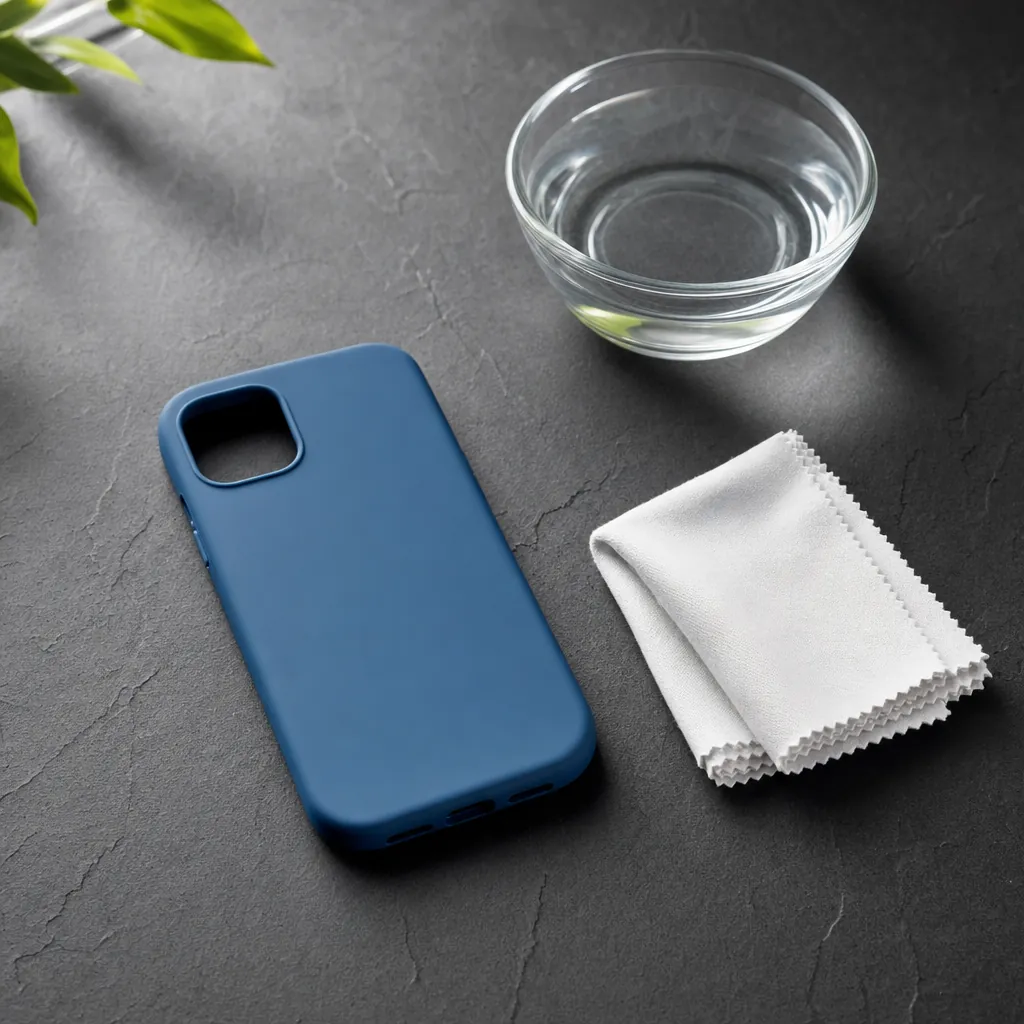
How to Clean a Silicone Phone Case Without Making It Sticky
Learn how to clean a silicone phone case with a damp microfiber cloth and avoid cleaners that can leave the finish sticky.
READ ARTICLE ↗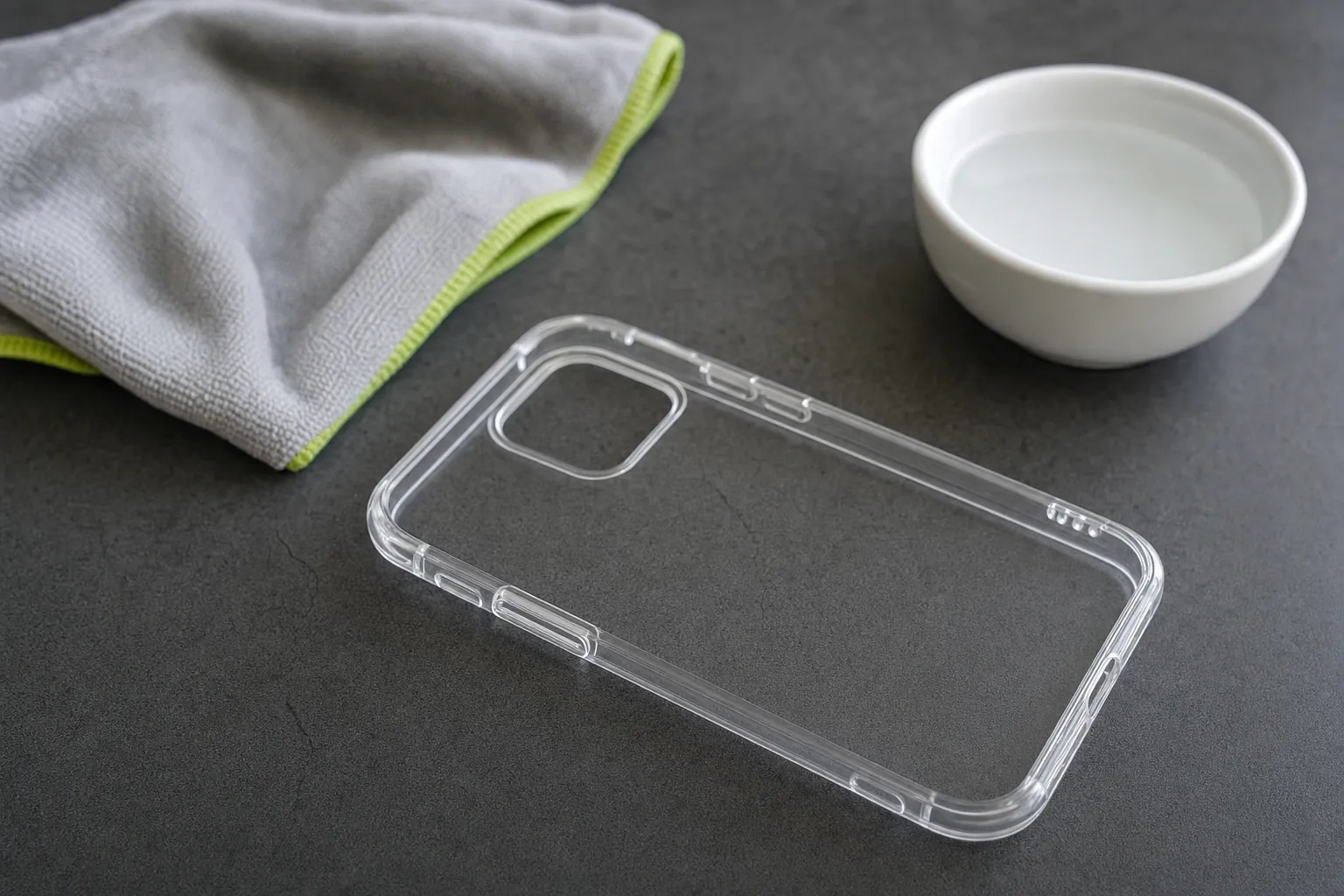
How to Clean a Clear Phone Case Without Damaging It
A gentle, practical method for removing everyday grime from a clear phone case, plus what to do when it starts to yellow.
READ ARTICLE ↗
Why Do Clear Phone Cases Turn Yellow?
What causes clear cases to yellow, what cleaning can actually fix, and simple ways to keep the finish looking fresh longer.
READ ARTICLE ↗