
A clear phone case can look almost invisible when it is new, then slowly pick up a warm yellow tint that no amount of wiping seems to remove. That change is frustrating because it is easy to mistake permanent material aging for ordinary dirt. The short answer is that both can be involved: surface oils and grime can dull a case, while heat, light, and everyday wear can change the clear material itself. Knowing which one you are looking at keeps you from wasting time on harsh cleaning tricks that may make the case look worse.
Why clear phone cases turn yellow
Many flexible clear cases use TPU or a similar soft plastic around the edges. It is useful because it bends around the phone and helps absorb everyday knocks, but it can slowly change color as it ages. Heat, ultraviolet light, skin oils, sweat, lotions, and air all add up over time. The yellow tone is often most noticeable at the sides and corners because those are the areas you touch and flex the most.
That does not mean a case turns yellow overnight because it was left near a window once. It is gradual wear. A case that rides in a warm car, sits in direct sun, or spends all day in a pocket with hand lotion and skin oils may show the change sooner than one that stays cooler and gets cleaned regularly. Manufacturers including ZAGG describe the same mix of UV exposure, heat, and material aging in clear-case discoloration.
Rigid clear backs can age too, but a hybrid case may change unevenly. You might see a mostly clear hard back with warmer, yellower flexible edges. That difference is not necessarily a sign that the case is dirty or defective. It usually reflects the different materials doing different jobs.
Know the difference between dirt and yellowing
Before you try to fix the color, look closely at where it sits. Fingerprints, makeup transfer, dust, and residue usually look patchy. They gather around the rim, camera opening, button covers, and inside surface. They often improve after a gentle wash. Permanent yellowing tends to look more even, as if the clear plastic itself has taken on a warm tint.
A quick test is useful. Remove the case, wipe one small area with a damp microfiber cloth and a tiny drop of mild dish soap, then compare it with the rest after it dries. If the wiped spot looks clearer, surface buildup was part of the issue. If the color looks the same all the way through, the material has likely changed. Cleaning can still make the case feel and look better, but it cannot reliably turn aged plastic back into brand-new clear plastic.
Do not judge only by the outside. The inside surface sits against the phone and can collect a thin film that makes the whole case look cloudy. Take it off and check both sides in daylight. That simple habit also gives you a chance to spot trapped grit before it scratches the back of your phone.
Heat and sunlight can speed up the change
Heat is hard on a clear case. A dashboard, a sunny windowsill, a hot bag, or a charging spot that already feels warm can all make aging more obvious over time. You do not need to treat your phone like it belongs in a museum, but it is worth avoiding long stretches of direct sun or a parked-car dashboard when you have an easy alternative.

Sunlight is only one part of the story. Charging, gaming, streaming, and warm weather can all make your phone and case warmer. If the case feels hot, let both the phone and case cool normally rather than putting them in a refrigerator or blasting them with cold air. Big temperature swings are not a care routine.
A clear case is still meant to be used. The practical goal is to avoid the obvious extremes, not to worry about every bright room or short trip outside.
Skin oils and everyday products leave a visible film
Hands transfer more than fingerprints. Hand cream, sunscreen, makeup, cooking oils, and sweat can all leave a film on clear plastic. Over time, that film makes the case look darker or yellowed even when the material underneath is still fairly clear. It can also settle into the texture around buttons and camera cutouts.
A dry microfiber wipe every week or two is usually enough to stop fresh marks from building up. If the case feels tacky, looks dull, or has a visible ring around the edges, remove it and clean both sides gently. This is where care makes a real difference. A regular clean cannot stop every form of aging, but it prevents surface residue from making the change look worse than it is.
Keep the phone separate while you clean. Apple recommends using a soft, slightly damp, lint-free cloth for its products and taking care around openings, which is a useful reminder to keep moisture away from the phone itself. Their cleaning guidance is a good reference for the device, while the removable case can be cleaned on its own.
Use a gentle cleaning routine
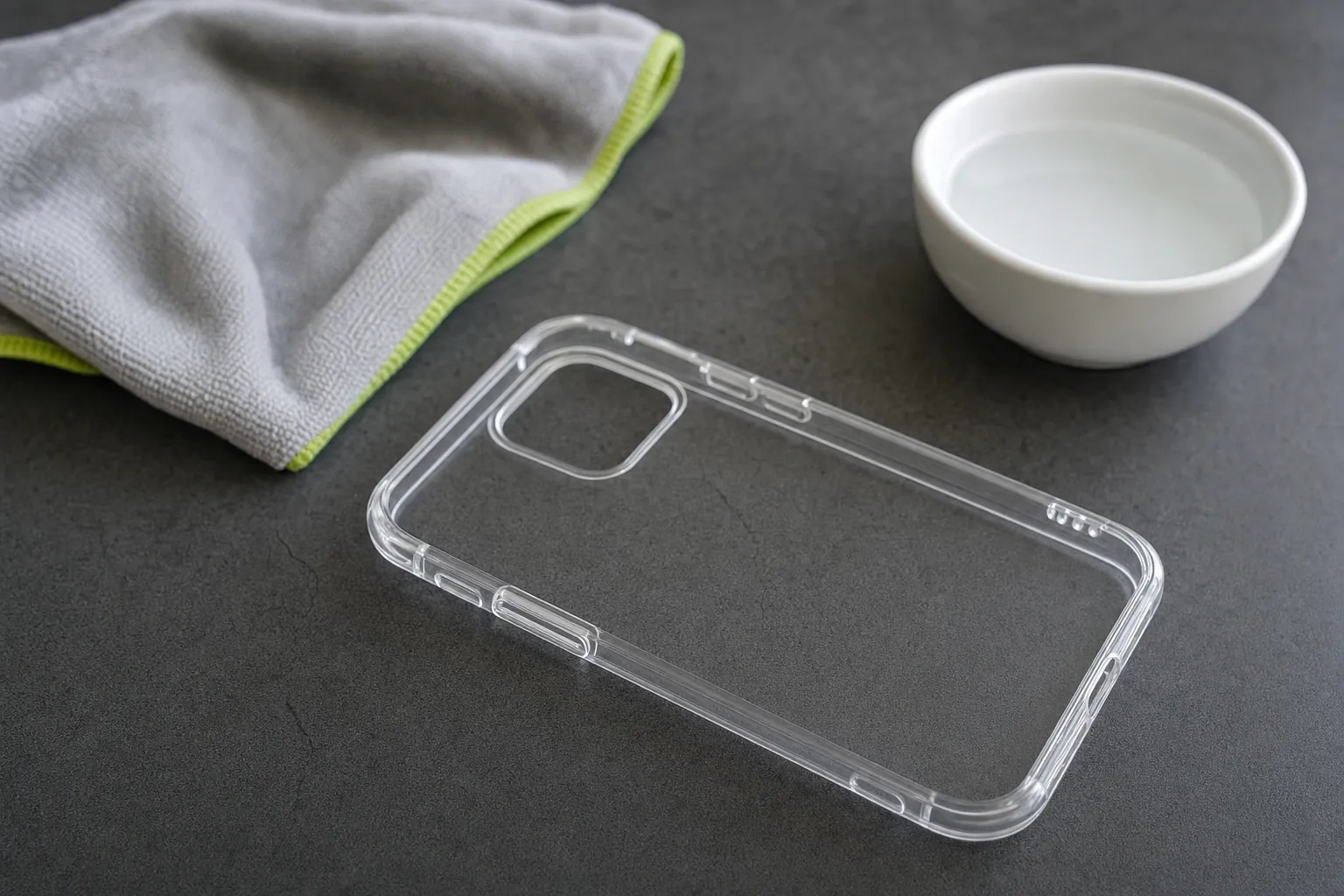
The safest routine is simple: remove the case, shake out loose grit, then wipe it with lukewarm water, a tiny drop of mild dish soap, and a soft microfiber cloth. Use light pressure around the inside rim, buttons, and camera opening. Rinse away soap with a second lightly dampened cloth, then leave the case to dry completely before putting it back on the phone.

Start with the gentle method before trying anything stronger. It removes ordinary buildup without attacking the finish. For a full step-by-step cleaning routine, use the clear phone case cleaning guide. It covers drying, sticky residue, and the materials to avoid.
A soft toothbrush can help around a stubborn camera rim or button cover, but keep pressure very light. Rough sponges and abrasive powders can leave fine scratches that catch more dirt later. Clear plastic makes those tiny marks easier to see, especially in sunlight.
Skip whitening hacks and harsh chemicals
Search results are full of dramatic before-and-after tricks, from bleach and peroxide to baking soda pastes and nail polish remover. These methods are not a reliable fix for yellowing that has happened inside the material. At best, they may remove some surface grime. At worst, they can cloud the plastic, roughen the finish, weaken flexible edges, or leave a case that feels sticky and brittle.
It is also worth being careful with frequent alcohol use. Some cases handle an occasional wipe better than others, but coatings and material blends vary. If you are not sure what the case is made from, mild soap and water are the safer default. Test any cleaner on a hidden corner first, and stop if the surface becomes dull, tacky, or rough.
Do not put a case in the dishwasher or washing machine. Heat, detergent, and tumbling are more likely to warp or damage it than restore the clear finish. A few minutes of hand cleaning is less dramatic, but it is the option that respects the material.
Choose a clear case for how you actually use your phone
No clear case can promise to stay unchanged forever, especially if it uses flexible transparent material. The more useful question is whether it fits your daily setup. If you use magnetic charging or a magnetic power bank, a clear MagSafe case for iPhone can keep that routine simple while letting the phone's original color show through. If you want the lightest possible feel, a thinner clear option may suit you better.
Fit matters just as much as appearance. A case should sit snugly around the corners, line up cleanly with the buttons, and leave the camera opening clear. A case that is stretched or warped may still look acceptable from a distance, but it is less likely to stay in place when the phone takes a knock.
When you browse the phone case collection, think about the moments your phone is most exposed: commuting, travel, gym bags, a car console, a desk charger, or a pocket with keys. A clear case that works with those habits is more likely to stay on the phone, which is more valuable than chasing a perfectly invisible look.
Replace the case when protection is the bigger concern
Yellowing alone is mostly an appearance decision. If you still like the case, it fits securely, and the material is smooth and intact, you can keep using it. But color is not the only sign of age. Watch for stretched corners, cracks around the camera opening, split button covers, sharp edges, or a rim that no longer hugs the phone.

Those issues affect protection more than a warm tint does. A loose case can shift or pop off during a drop, which defeats the reason to use one. When it is time to replace yours, the transparent MagSafe iPhone case is a practical option for shoppers who want a clear look with compatible magnetic charging, while the clear color-frame case adds a more expressive edge.
It can be smart to keep a spare case for travel or busy weeks. Then a cracked or stretched case does not leave your phone uncovered while you wait for a new one.
A simple way to keep a clear case looking better
There is no miracle product that permanently reverses every yellow clear case. The best approach is ordinary care: wipe fresh fingerprints away, wash off residue before it builds up, avoid obvious heat and sun extremes, and replace the case once fit or protection is compromised. That routine is realistic, inexpensive, and much kinder to the material than aggressive whitening experiments.
Make the check part of another routine you already have, such as changing your sheets, cleaning your desk, or packing for a trip. Remove the case, wipe the phone and the inside surface, then look at the corners and camera opening before snapping it back on. It takes less than a minute when the case is only lightly soiled, and it makes small damage easier to spot before a loose edge becomes a bigger problem.
Clear cases are popular because they make the phone feel like itself. A little care helps preserve that clean look longer, and knowing when a case has simply reached the end of its useful life makes the next choice much easier.
FREQUENTLY ASKED QUESTIONS
Clear phone case yellowing
Can I make a yellow clear phone case clear again?
You can remove surface grime, but a yellow tint that has developed inside the material usually cannot be reversed safely. Gentle cleaning may improve the look, while harsh whitening tricks can make plastic cloudy or brittle.
Do clear hard cases turn yellow too?
They can age and discolor, but the change varies by material, finish, heat exposure, and use. Flexible clear edges often show yellowing sooner than a rigid clear back.
How can I keep a clear phone case from turning yellow?
Keep it away from prolonged heat and direct sun when practical, clean surface oils regularly, and avoid harsh chemicals. These habits can slow visible aging, but no clear case stays brand-new forever.
When should I replace a clear phone case?
Replace it when yellowing bothers you, the corners stretch, the edges crack, the buttons no longer line up, or the case no longer sits securely around the phone.
RELATED POST
Keep your clear case clean.
How to Clean a Clear Phone Case Without Damaging It
A gentle, practical method for removing everyday grime from a clear phone case, plus what to do when it starts to yellow.
READ ARTICLE ↗