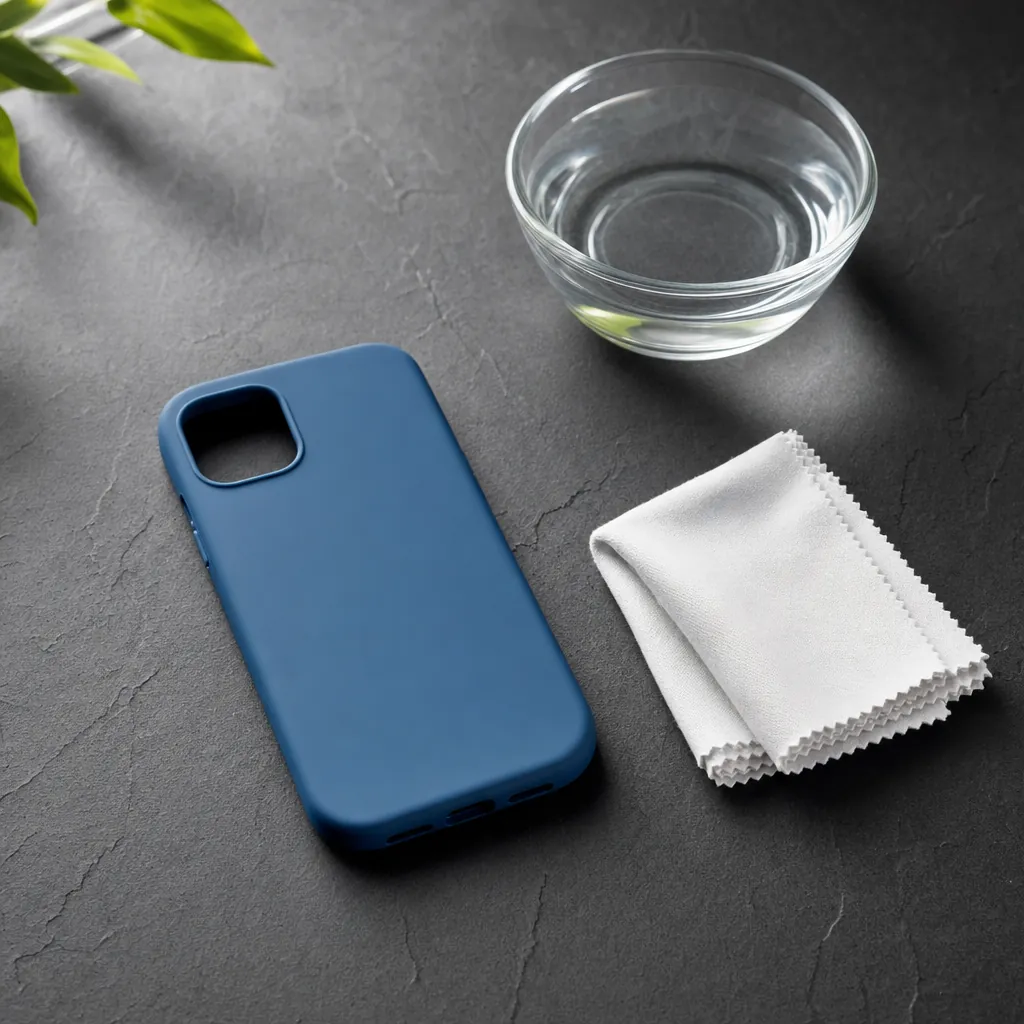
A silicone phone case is easy to live with until fingerprints, pocket lint, sunscreen, or a mystery mark make the soft finish look dull. The good news is that most everyday mess comes off without a special cleaner. The important part is keeping the method gentle. Silicone and soft-touch finishes can look worse when they are scrubbed hard or covered in residue from the wrong product.
Step 1: Start with the safest method
Start simple: remove the phone, use a soft lint-free microfiber cloth that is only slightly damp with water, and wipe the outside and inside of the case with light pressure. Then use a dry part of the cloth to pick up remaining moisture. This is not a shortcut. It is the care approach Apple gives for silicone, clear, polycarbonate, and TPU iPhone cases in its official cleaning guidance.
The case should be dampened by the cloth, never soaked. A wet case can leave water around button covers, camera openings, and the inner rim. The phone should stay out until the case feels completely dry. That makes it easier to clean the whole surface and prevents moisture from being trapped against the device.
For most people, that is the entire routine. A fresh microfiber wipe removes the hand oils and dust that make a matte case look shiny or grimy. It is also gentle enough to repeat, which matters more than trying one aggressive cleaning trick once a season.
Step 2: Remove the case and check the surface
Take the case off before you start. With the phone out, turn the case over and check the inside rim, camera opening, corners, and button covers. Those are the spots that tend to collect lint, makeup, food crumbs, and a thin film from hands.
It helps to tell the difference between a surface mark and a worn finish. A surface mark is usually uneven. It might look like a darker smudge, a shiny patch, or a small ring near the edges. It should improve after a careful wipe. A worn or damaged finish may stay tacky, faded, cracked, or permanently shiny even when it is clean.
Shake out loose grit before using the damp cloth. Rubbing a grain of sand or pocket debris across a soft finish can leave a mark that cleaning cannot undo. This is also a good time to inspect the fit. If a corner is stretched or the case no longer hugs the phone, the bigger issue is protection, not appearance.
Step 3: Wipe with a slightly damp microfiber cloth
Wet the cloth, not the case. Wring it out until it feels barely damp, then wipe in small, gentle passes across the back, sides, inside surface, and camera surround. Fold the cloth as you work so you are not moving the same dirt from one area to another.

Use light pressure around raised camera lips, magnetic rings, decorative edges, and button covers. The goal is to lift the film sitting on the surface. Pressing harder does not make the case cleaner, and it can leave a soft-touch coating looking uneven.
Once the visible dirt is gone, give the inside a separate wipe. The inside is easy to forget, but it is the surface that sits against the phone. Keeping it free of grit helps the phone stay cleaner and makes it easier to notice when the case itself has started to wear out.
Step 4: Handle stubborn spots without scrubbing
A sticky patch from lotion, sunscreen, food, or makeup can take more than one pass. Hold the slightly damp microfiber cloth on the spot for a few seconds, then wipe with gentle circular motion. Letting the moisture loosen the residue is safer than attacking it with a rough sponge or fingernail.
If the mark starts to lift, continue slowly and use a clean area of the cloth. If it does not change after a few careful attempts, stop. Some marks are dye transfer, coating wear, or damage that cannot be safely rubbed away. More friction is likely to make the finish look blotchy.
A soft toothbrush is sometimes suggested for hard-to-reach edges, but it should be a last resort and used with almost no pressure. For a smooth silicone surface, microfiber is the better tool. Brushes, paper towels, and abrasive pads can leave fine texture changes that become obvious under bright light.
Skip the cleaners that can damage the finish
It is tempting to reach for whatever is under the sink, especially when a case feels greasy or looks stained. That is usually where a minor cleaning job becomes a finish problem. Apple specifically advises against window cleaners, household cleaners, aerosol sprays, solvents, ammonia, abrasives, and products containing hydrogen peroxide for these case materials.
That list rules out a lot of popular hacks: nail polish remover, bleach, harsh degreasers, abrasive powders, and rough scrub pads. They may cut through surface residue, but they can also alter the color, feel, or protective coating. A silicone case that becomes cloudy, faded, or sticky after cleaning is not a win.
Do not put the case in a dishwasher or washing machine. Heat, detergent, and tumbling are not designed for a fitted phone accessory. A short hand-clean with a lightly damp cloth is slower by about two minutes and much less likely to create a problem you cannot reverse.
Clean colored cases with the same restraint
Colored silicone cases can hide everyday grime better than clear plastic, but they still collect the same mix of oils and residue. Lighter colors may show makeup transfer or denim dye around the lower edges. Darker colors can develop shiny hand-contact spots that make the surface look uneven. In both cases, start with the damp microfiber cloth rather than a stronger cleaner.
Pay special attention to the places where your grip naturally lands: the lower sides, the area around the camera, and the rim near the charging port. Wiping these spots regularly prevents residue from building into a darker outline. It is easier to make a quick clean part of your routine than to rescue a case after weeks of buildup.
Be careful with bright colors, prints, metallic accents, and soft-touch coatings. Those finishes can vary from one case to another. If the manufacturer gives a care instruction, follow it. If you do not have one, use the mildest reliable method first and test an unfamiliar product on a hidden inner edge before using it across the visible surface.
Dry it before putting it back on
After cleaning, wipe the case with a dry lint-free cloth and leave it open-side-up until the camera cutout, button areas, and inner rim are dry. A quick visual check is enough. If you can still see moisture in a seam or feel dampness along an edge, give it more time.

Skip the hair dryer, radiator, dashboard, or any other high-heat shortcut. The case will dry naturally, and avoiding extra heat is kinder to both the shape and finish. While you wait, use a separate dry microfiber cloth to remove dust from the back and sides of the phone itself.
When you put the case back on, check that every corner seats evenly and the buttons line up. A clean case should still fit snugly. If it shifts, pulls away from the phone, or has a cracked rim, cleaning has done all it can do.
After sunscreen, workouts, and spills
A normal weekly wipe is enough most of the time, but some days call for a faster clean. Sunscreen, foundation, hand cream, cooking oils, and sweat can all leave a visible film on silicone. After the beach, gym, a long drive, or a cooking session, take the case off when you get home and give both sides a gentle wipe before the residue has time to settle.
For a spill, blot first with a dry soft cloth. Avoid spreading it across the case with a wet wipe or pushing it toward the phone openings. Once the loose mess is gone, use the same slightly damp microfiber method and let the case dry fully. The order matters because it keeps grit and dye from being rubbed into the surface.
If a case comes into contact with ink, hair dye, strong food coloring, or a chemical product, the stain may not fully lift. Gentle care is still worth trying, but do not assume every mark can be erased without a tradeoff. Protecting the finish and keeping the case fitted properly is more useful than chasing a perfect cosmetic result.
Know when a clean is enough and when to replace it
Cleaning solves surface grime. It cannot repair stretched corners, splits, deep scratches, or a coating that has started to break down. If the case still feels sticky after a gentle clean, keeps picking up residue immediately, or no longer sits securely around the phone, replacement is usually the more practical choice.
That does not mean every faded case needs to be thrown away. A small scuff is mostly cosmetic. The signs that matter are loose edges, cracks around the camera opening, exposed corners, and button covers that no longer line up. Those can affect how well the case stays on during an everyday drop.
For readers who like the same soft feel but want a fresh finish, Snap & Grip carries silicone options in a range of colors alongside clear and magnetic cases. The phone case collection is a useful place to compare the style, grip, and charging setup that suits your everyday routine.

If you use magnetic charging or accessories, choose a case made for that setup rather than forcing a magnetic plate onto a worn case. If you want a lightweight, simple option, focus on fit and button alignment first. A case you like using is more likely to stay on the phone when it matters.
Make it a small repeatable routine
The easiest care habit is a quick wipe every week or two, plus a full clean after sunscreen, a spill, travel, a workout, or any time the case feels tacky. Keep one microfiber cloth near where you charge your phone and the job takes less than a minute.
That small routine does more than make the case look better. It lets you spot a loose corner, a clogged camera opening, or trapped grit early. A silicone case is supposed to make your phone easier to hold and protect. A gentle clean keeps the finish doing its job without turning ordinary care into a chemistry project.
FREQUENTLY ASKED QUESTIONS
Cleaning silicone phone cases
Can I wash a silicone phone case with soap and water?
A soft, slightly damp lint-free cloth is the lowest-risk starting point. If your case maker specifically permits mild soap, use only a tiny amount on the cloth, wipe away residue with a clean damp cloth, and dry the case fully before putting it back on the phone.
Why does my silicone phone case feel sticky?
Sticky spots can come from skin oils, lotion, sunscreen, food residue, or a cleaner that left film behind. Start with a clean, slightly damp microfiber cloth. If the surface stays tacky after gentle cleaning, the material or coating may be worn rather than dirty.
Can I use rubbing alcohol on a silicone phone case?
Check the case maker’s care advice first. Materials and coatings vary, so a soft, slightly damp lint-free cloth is the safer default when you do not have a specific cleaning instruction for your case.
How often should I clean a silicone phone case?
A quick wipe every week or two is enough for most people. Clean it sooner after sunscreen, makeup, cooking, exercise, travel, or any spill that leaves a visible mark.
RELATED POSTS
Keep every case in good shape.
How to Clean a Clear Phone Case Without Damaging It
A gentle, practical method for removing everyday grime from a clear phone case, plus what to do when it starts to yellow.
READ ARTICLE ↗
Why Do Clear Phone Cases Turn Yellow?
What causes clear cases to yellow, what cleaning can actually fix, and simple ways to keep the finish looking fresh longer.
READ ARTICLE ↗