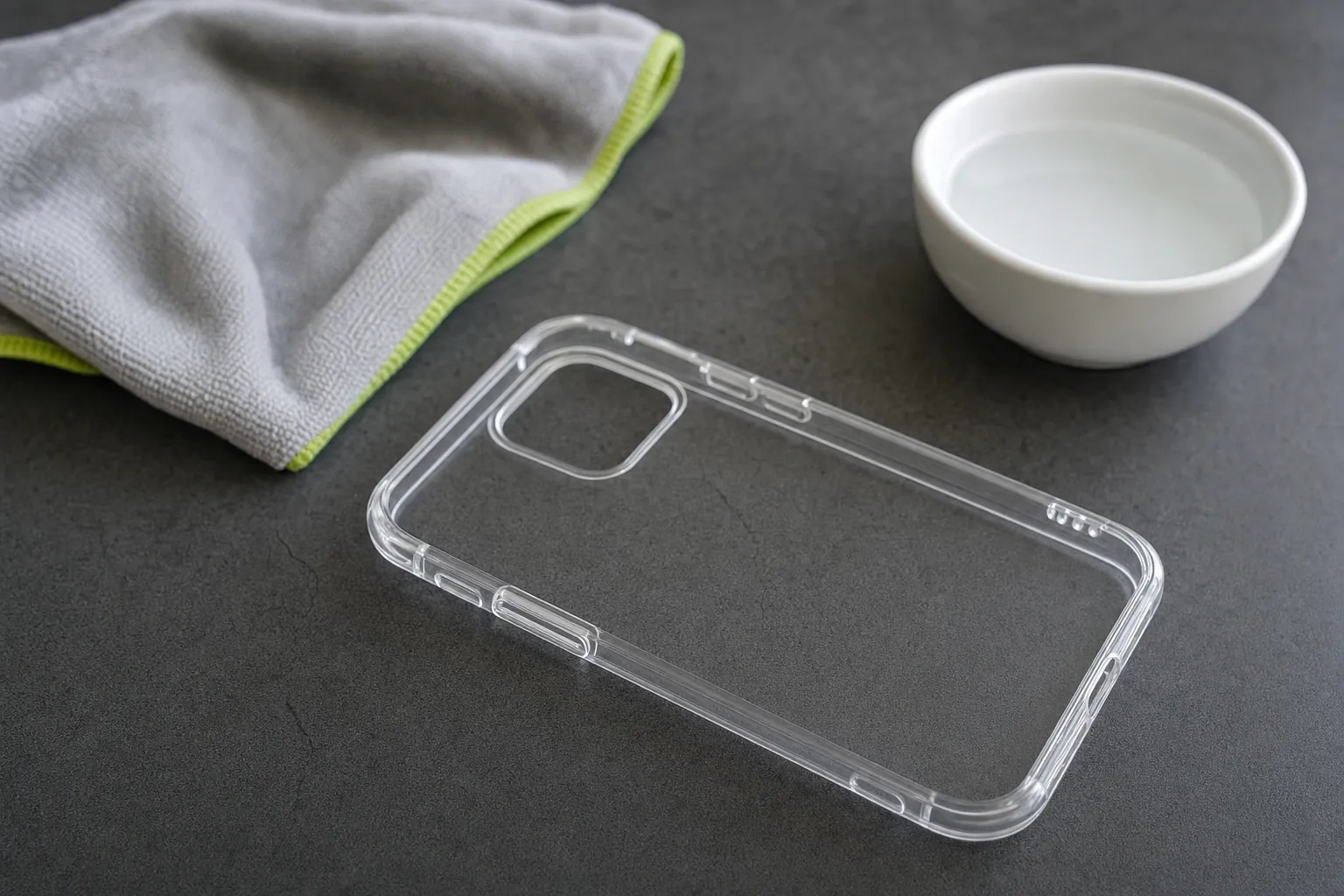
A clear phone case has one obvious job: show off your phone while helping it handle daily bumps and scratches. It also shows every fingerprint, pocket lint smudge, and bit of hand lotion. The good news is that most surface grime comes off with a short, gentle clean. The important part is using a method that helps the case without turning the job into a chemistry experiment.
Start by removing the case
Take the case off your phone before you clean it. This keeps moisture away from the ports, buttons, speakers, and camera. It also lets you reach the rim, button covers, and inside surface, which are usually where skin oils and trapped dust build up.
Set the phone aside on a dry, soft surface. Shake loose any crumbs or grit from the case first. That small step matters because rubbing grit across a clear finish can leave fine marks that make the plastic look hazy in certain light.
If you are cleaning the phone too, keep that separate from the case. Apple’s care guidance for its products is a useful reminder to avoid getting moisture into openings and to be careful with cleaners. A removable case is much easier to wash than the phone inside it.
Use the gentle cleaning method first
For regular cleaning, you only need lukewarm water, a tiny drop of mild dish soap, and a clean microfiber cloth. Dampen the cloth rather than soaking the case. Wipe the outside, inside, edges, and button areas with light pressure. The goal is to lift oils and grime, not scrub the finish.
For a stubborn spot, use a soft toothbrush with very light pressure after the case has been dampened. Work around the corners, camera opening, and button covers. Skip stiff brushes, rough sponges, and abrasive powders. They can leave small scratches that collect more grime later.
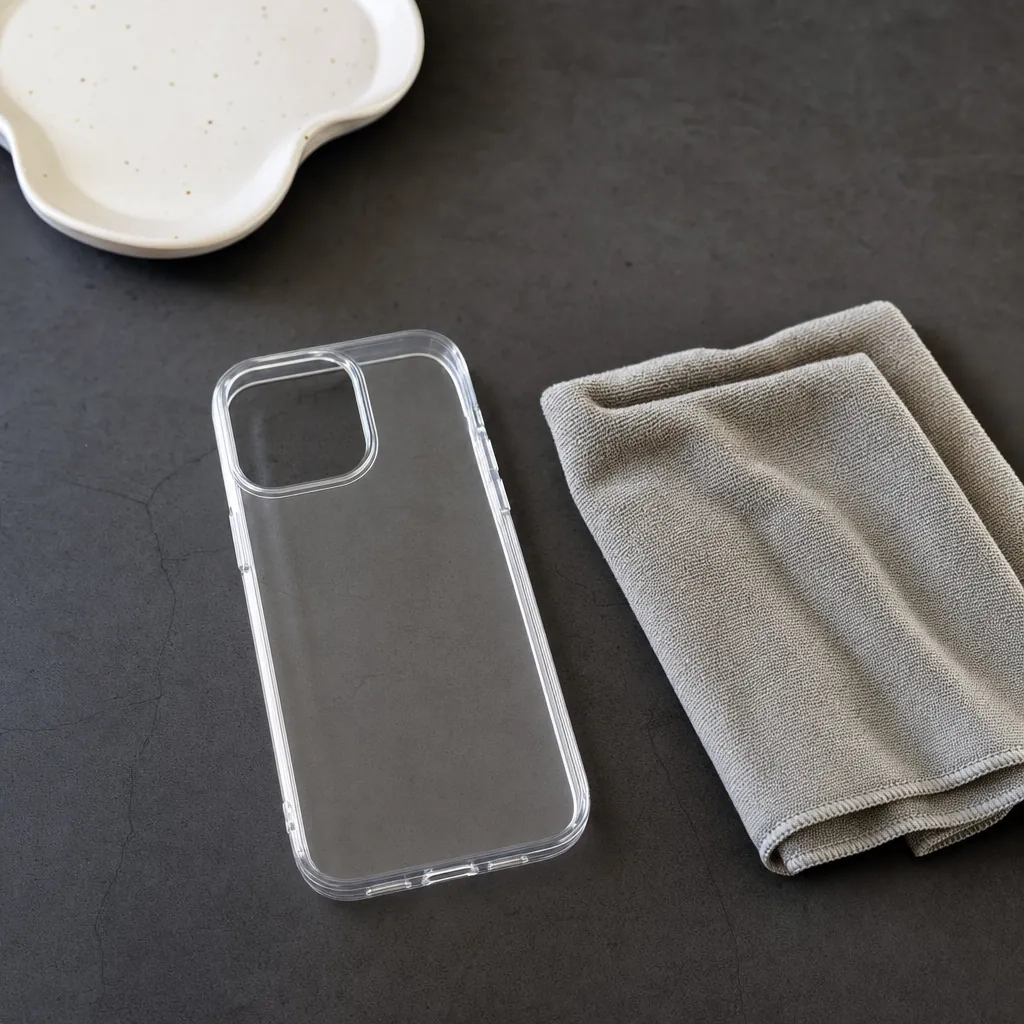
Rinse away any soap residue with a lightly dampened cloth, then move on to drying. Leaving soap film behind can make a clear case look dull even when it is technically clean.
Use a simple five-minute cleaning checklist
A short routine is easier to repeat than a once-a-season deep clean. Before you begin, gather a microfiber cloth, a small bowl of lukewarm water, a drop of mild dish soap, and a dry towel. You do not need a special kit, and you definitely do not need a cabinet full of cleaners.
First, remove the case and shake it out. Second, wipe loose dust away with the dry side of the microfiber cloth. Third, use the lightly soapy side of the cloth to clean the outside and inside surfaces. Fourth, work gently around the camera opening, charging-port edge, and buttons. Fifth, wipe away soap with a separate damp cloth and let the case dry completely.
That order prevents a common mistake: rubbing gritty dust into the case while it is wet. It also gives you a chance to check the fit. If the corners are stretched, the buttons no longer line up, or the edge has started to split, cleaning will not fix the part that matters most. Protection depends on the case staying snug around the phone.
For a quick between-clean refresh, skip the soap and use a clean dry microfiber cloth. A few seconds is enough to remove fresh fingerprints from the back and sides before they build into a visible film.
Dry it completely before putting it back on
Pat the case dry with a second microfiber cloth, then leave it open side up until no moisture remains around the camera cutout, button covers, or edges. Do not use a hair dryer, radiator, or hot car dashboard to speed things up. Heat can warp flexible materials and may make a clear finish age faster.
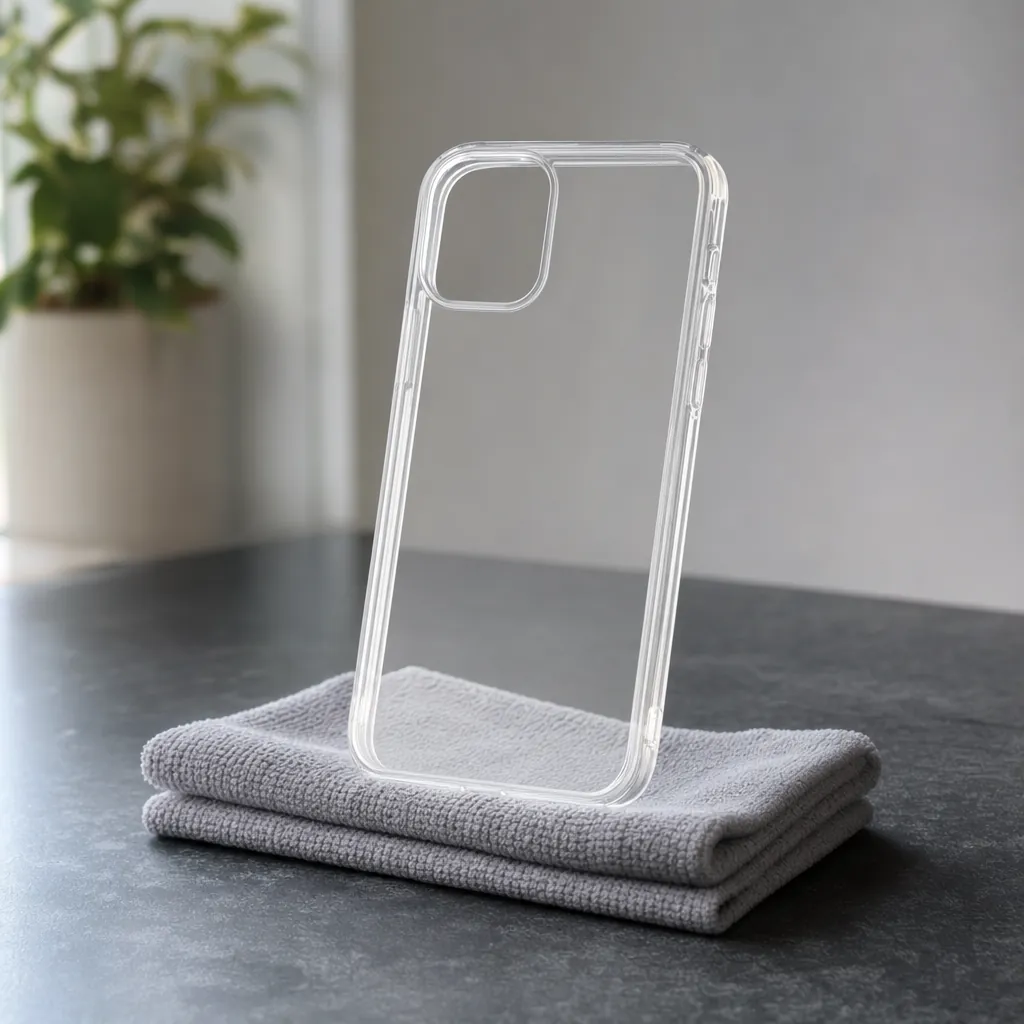
Once the case is dry, wipe down the back and sides of your phone with a dry microfiber cloth, then snap the case back on. Check that the edges are seated evenly and that the camera opening is clear of lint.
Handle sticky residue without scraping
Adhesive residue from a price label, a pocket sticker, tape, or a grip accessory can make a clear case feel worse than ordinary dirt. Start with warm water and a mild soap wipe. Let the damp cloth rest over the spot for a minute, then rub with light pressure. Softening the residue is safer than trying to scrape it off.
If the mark remains, stop before using a blade, metal tool, or nail file. Sharp edges can cut into the clear finish and leave a permanent cloudy spot. A plastic card is less risky, but it should only be used very gently after the residue has softened. Do not use it on a case with a printed design, coating, or decorative finish unless the maker says it is safe.
When a case has a magnetic ring, raised trim, or a textured bumper, clean around those details with the corner of a microfiber cloth rather than pushing liquid into gaps. The goal is a clean surface, not a perfectly polished showroom object. A little patience is far cheaper than replacing a case because a stubborn label turned into a deep scratch.
Know the difference between dirt and yellowing
Surface dirt usually looks like fingerprints, gray film, makeup transfer, or small dark marks around the edges. It should improve after a gentle wash. Yellowing is different. It often looks like an even warm tint through the clear material, especially around the sides and corners.
Many clear cases use flexible plastics that slowly change color as they react to heat, sunlight, oils, and air. Cleaning can remove the grime sitting on top, but it cannot reliably reverse a color change that has developed inside the material. Strong whitening tricks might make a case look different for a moment, but they can also leave it cloudy, brittle, or rough.
When a case is truly yellowed, scratched, stretched, or no longer fits tightly, replacing it is usually the better call. A new phone case from the case collection restores a clean look and gives you a chance to choose the protection, grip, or charging compatibility you need now.
Match the method to the case material
Not every clear case feels the same, and that is usually because the materials are different. Softer TPU-style cases tend to flex around the phone and are common for clear, slim designs. Rigid clear backs may feel more like acrylic or hard plastic. Hybrid cases often combine a firm back with softer edges. The gentle soap-and-water method is the best starting point for all of them.
For soft, flexible cases, avoid tugging the corners or twisting the frame while you clean. The material may recover, but repeated stretching can make the fit looser over time. For hard clear cases, be especially careful with dry grit and rough tools because fine scratches show more easily across a smooth glossy surface.
Magnetic cases deserve one extra check: keep the charging ring and surrounding surface free from residue. A clean, flat back helps magnetic accessories sit properly. You do not need to scrub the ring or soak it. A soft cloth is enough for normal care.
If the product page gives cleaning directions, follow those first. Material blends, finishes, and decorative coatings can vary. When you are unsure, use the least aggressive option, clean a small inconspicuous area, and only continue if the finish stays clear and smooth.
Skip harsh cleaners and rough tools
It is tempting to reach for whatever is under the sink, but a clear case does not need aggressive treatment. Avoid bleach, hydrogen peroxide products, acetone, nail polish remover, strong degreasers, scouring pads, and abrasive powders. These can cloud, dry out, or weaken plastic and TPU materials.
Alcohol-based wipes are common for electronics, but their effect can vary by case material and finish. If you decide to use one, test a tiny hidden area first, follow the case maker’s guidance, and use it sparingly. Never soak the case or put it back on while it is still wet.
Also skip the dishwasher and washing machine. Heat, detergent, and tumbling can deform the case or leave it less secure around the phone. A two-minute hand clean is safer and easier.
Make clear-case care part of your routine
Clear cases stay looking better when cleaning is routine instead of a rescue job. Wipe yours down every week or two, especially if it spends time in a gym bag, purse, car console, or pocket with keys and coins. Clean it after a spill, a beach day, travel, or any time it feels tacky.
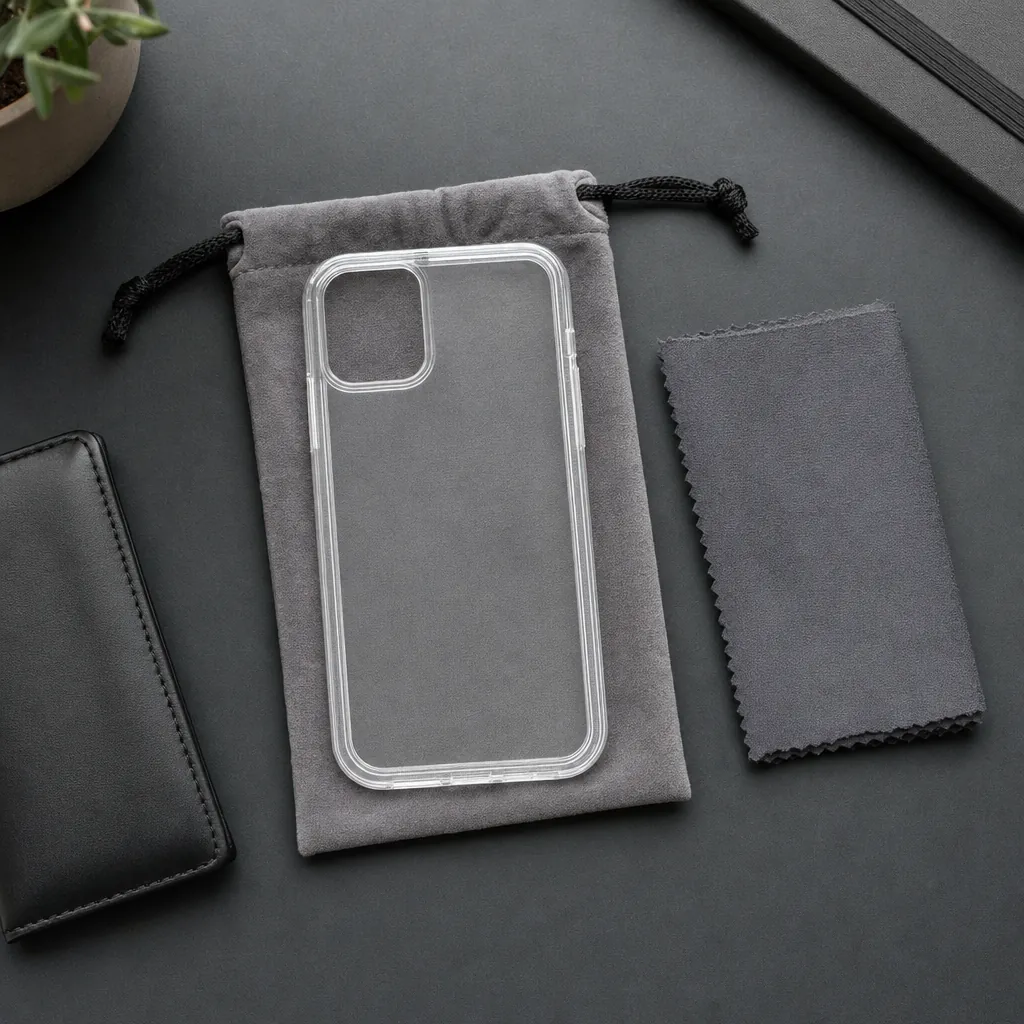
Keep a clean microfiber cloth where you charge your phone or in your work bag. It is more useful than it sounds. A fast dry wipe removes fresh fingerprints before they settle into the corners, and it also gives you a chance to notice cracks, stretched edges, or a loose fit.
Replace the case when protection is compromised
A case can look clean and still be ready to retire. Replace it when the rim no longer hugs the phone, a corner is cracked, the camera opening has chipped, or the button covers have torn. Those details are what help the case stay on during a drop. Once the fit is loose, a case can shift or pop off when you need it most.
Replace it for comfort, too. If the surface stays tacky after a gentle wash, has deep scratches that catch on fabric, or feels rough around the edges, a fresh case will simply be more pleasant to use. A phone accessory should make everyday handling easier, not feel like something you are tolerating.
When you are ready for a replacement, consider how you charge, where you carry your phone, and whether you prefer a slim feel or more edge coverage. Those everyday details are more useful than chasing a finish that only looks good in the product photo. It also helps to keep one spare case for travel or busy days, so a cracked case does not leave your phone unprotected while you shop for a replacement.
Choose your next clear case with everyday use in mind
A clean case looks best when it also fits how you use your phone. If magnetic charging is part of your routine, the MagSafe transparent iPhone case keeps the clear look while supporting magnetic accessories. If you want a brighter edge and a more playful finish, the candy color frame clear-back case gives you that extra character.
For a broader look at styles, coverage, and pricing, browse all Snap & Grip accessories. A case that feels good to hold and works with your daily charging setup is much more likely to stay on your phone, which is the point. The right one should disappear into the routine, except when it saves the day.
FREQUENTLY ASKED QUESTIONS
Clear phone case care
Can I use rubbing alcohol on a clear phone case?
Use care. A small amount on a soft cloth may be suitable for some cases, but repeated use can be harsh on certain finishes and materials. Check the case maker’s instructions first, keep liquids away from the phone, and avoid soaking the case.
Why did my clear phone case turn yellow?
Many flexible clear cases slowly change color as the material ages and reacts to heat, light, oils, and air. Surface grime can make the change look worse, but a deep yellow tint inside the material usually cannot be washed away.
Can I put a clear phone case in the dishwasher?
No. Dishwasher heat and detergent can warp, cloud, or weaken the case. Hand washing with lukewarm water, a tiny amount of mild dish soap, and a soft cloth is the safer choice.
How often should I clean my phone case?
A quick wipe every week or two is a good routine for most people. Clean it sooner after a spill, a workout, travel, or any time it feels sticky or looks dull.